When you're looking to find a mechanic to inspect a used car, you're making a truly smart move. A pre-purchase inspection (PPI) is a detailed check of a used car by an expert mechanic before you finalize your purchase. It's your best defense against buying a 'lemon' – a car with hidden problems that could cost you a lot down the road.
To find a mechanic to inspect a used car for a reliable pre-purchase inspection:
Seek an independent mechanic: Avoid using mechanics suggested by the seller.
Look for ASE-certified experts: This certification shows they have proven skills.
Choose someone experienced in PPIs: These inspections are different from typical repair jobs.
Confirm a comprehensive check: Ensure they inspect the entire vehicle, bumper-to-bumper.
Request a detailed written report: This report is your key tool for understanding the car's condition and for negotiation.
Getting a PPI gives you invaluable peace of mind. It helps you make a truly informed decision, avoiding unexpected repair costs and protecting your investment.
I'm Howard Lutz, and I've spent over four decades in the automotive industry, inspecting more than 25,000 vehicles. My goal is to help you find a mechanic to inspect a used car for an unbiased, honest assessment, ensuring you buy with confidence.
Buying a used car can feel a bit like a treasure hunt – exciting, but also full of hidden traps! While a vehicle might sparkle on the outside, there could be significant issues lurking beneath the surface, ready to turn your dream car into a financial nightmare. This is precisely why a pre-purchase inspection (PPI) isn't just a good idea; it's hands down your best investment for genuine peace of mind and solid financial protection.
A PPI is a super thorough examination of a used vehicle, carried out by a qualified, independent mechanic. It's specifically designed to uncover those hidden problems that you'd never spot during a quick test drive or a casual walk-around. Think of it like a comprehensive background check for your potential car – you wouldn't hire someone without one, so why would you buy such a big investment without knowing its true history?
Many used cars, especially those from private sellers, are sold "as is." This simply means that once you drive off with your new-to-you car, any and all problems that pop up are entirely your responsibility. The Federal Trade Commission (FTC) even requires car dealers to display a Buyer's Guide in every used vehicle they sell. This guide clearly states whether the car is "as is" or comes with a warranty. Understanding this document is crucial, but even if there's a warranty, a PPI can save you a ton of future headaches and unexpected repair bills.
We've seen countless times how a PPI has saved a buyer from purchasing a real 'lemon' – a car riddled with expensive, undisclosed issues. Without a professional eye, problems like a failing transmission, hidden accident damage, or serious rust can easily go unnoticed until it’s far too late. An independent mechanic provides an unbiased assessment, pointing out any damage or potential repairs that might have been missed by a dealer or even intentionally hidden by a private seller. This objective evaluation is absolutely critical to protecting your hard-earned money and ensuring you don't end up with a costly money pit.
When you're considering a pre-purchase inspection, one of the first things that comes to mind is often the cost. While it is an added expense, we truly believe it's a very small price to pay for the enormous peace of mind and the potential savings it offers down the road. It’s an investment in your future driving happiness!
The average cost for a used car inspection typically falls somewhere between $100 and $150. Generally, you can expect a standard inspection to cost between $100 and $200. However, prices can vary a bit. For instance, more detailed checks, or inspections for specialized vehicles like luxury cars, classic cars, commercial vehicles, motorcycles, or RVs, can run several hundred dollars. To give you an idea, some services might charge around $210 for motorcycles and up to $449 for RVs, simply because these vehicles are more complex and take more time to thoroughly inspect.
The final cost can be influenced by a few key things. For example, the type of vehicle plays a big role – a tiny sedan won't take as long to inspect as a massive RV! Also, the depth of the inspection matters; a quick visual check will be less expensive than a comprehensive, bumper-to-bumper examination that includes diagnostic scans and a full test drive. And, of course, the mechanic's expertise and their location can affect the price, as can whether you choose a mobile inspection that comes right to you or a traditional shop visit.
The value you get from a PPI far, far outweighs its cost. For a relatively small fee, you gain critical information that can either confirm you're making a brilliant purchase or, even better, save you thousands of dollars in unforeseen repairs. It’s a smart investment in your financial security and ensures you'll be driving away with confidence, not concerns. To get a better idea of what to expect, you can learn more about what to expect to pay for an inspection.
When you're ready to buy a used car, knowing how to find a mechanic to inspect a used car can make the difference between a great purchase and a costly mistake. The key is finding someone who's not only skilled but completely independent from the seller.
Think of it this way: you wouldn't ask a restaurant owner to tell you which competitor makes better food. The same logic applies when you find a mechanic to inspect a used car. Never use a mechanic suggested by the seller, whether it's a private party or dealership. Even reputable dealership service departments can have a conflict of interest when inspecting cars their sales team wants to move off the lot.
Your inspection mechanic should work for you alone, with only your best interests in mind. This independence is what ensures you get an honest, unbiased assessment of what you're really buying.
Not every good mechanic makes a great inspection mechanic. When you find a mechanic to inspect a used car, look for specific qualities that matter for pre-purchase inspections.
ASE Certification is your first green flag. The National Institute for Automotive Service Excellence (ASE) certifies mechanics who pass tough exams in specific automotive areas. When you see the ASE seal at a shop, it means at least 75% of their mechanics are certified. This isn't just a piece of paper – it shows real commitment to staying current with automotive technology.
Make and model specialization can be incredibly valuable, especially for European cars, luxury vehicles, or models with known quirks. A mechanic who works on your type of car regularly will spot issues that a general mechanic might miss. They know where problems typically show up and what warning signs to watch for.
Pre-purchase inspection experience is crucial because these inspections have a different goal than regular repairs. A great PPI mechanic understands they're looking for potential problems before you buy, not fixing existing ones. They know how to prioritize findings and explain what's urgent versus what can wait.
Most importantly, you want someone who provides an unbiased assessment. The best inspection mechanic doesn't care whether you buy the car or walk away. Their only job is giving you accurate, complete information about the vehicle's condition. This independence from the seller is what makes their opinion truly valuable.
So where do you actually find a mechanic to inspect a used car who meets these standards? Start with the people you trust most.
Word-of-mouth recommendations from friends, family, and coworkers are often your best bet. These people have no reason to steer you wrong, and they've experienced the mechanic's work firsthand. Don't just ask about regular repairs – specifically ask if they've used the mechanic for inspections or major diagnostics.
Online reviews can reveal a lot about a shop's reputation, but read them carefully. Look for comments about thoroughness, honesty, and clear communication. Pay attention to how shops respond to negative reviews – this tells you a lot about their customer service approach.
The Better Business Bureau provides another layer of research. Check their ratings and complaint history, but also see how quickly and effectively shops resolve any issues that come up.
Local business directories and community forums can be goldmines for recommendations. Many areas have Facebook groups or neighborhood apps where people share experiences with local businesses. Community recommendations from people in your area are especially valuable because they know the local shops.
Here's where things get really convenient. Mobile pre-purchase inspections bring the expertise directly to wherever the car is located – the seller's driveway, a dealership lot, or even your workplace.
The biggest advantage is pure convenience. You don't need to coordinate getting the vehicle to a shop, which can be complicated when you don't own the car yet. The seller doesn't have to drop it off anywhere, and you don't need to arrange transportation. This flexibility often makes the difference between getting an inspection done and skipping it altogether.
Mobile inspections offer flexible scheduling that works around your life. Many services work seven days a week with extended hours, so you can often get an inspection done quickly without taking time off work or rearranging your weekend plans.
During a mobile inspection, you can expect the mechanic to bring professional diagnostic tools, cameras for documentation, and equipment to safely examine the undercarriage. While they might not have a full lift like a shop, experienced mobile inspectors use floor jacks and specialized mirrors to conduct thorough examinations.
One of the benefits of not moving the vehicle is that you can see how it starts and runs in its normal environment. Sometimes cars behave differently when they've been sitting versus after being driven to a shop. Plus, there's no risk of something happening to the car during transport that could complicate the sale.
The inspection happens right there, and you often get results the same day or within 24 hours. This speed helps keep your car-buying process moving without long delays that might cost you the deal.
Alright, you've done the hard part of finding a great mechanic to inspect a used car. Now, let's talk about what that inspection actually is. It's not just a quick peek under the hood; it's a deep dive, a complete health check-up for your potential new ride. Think of it as a car detective working to uncover every secret the vehicle might be holding.
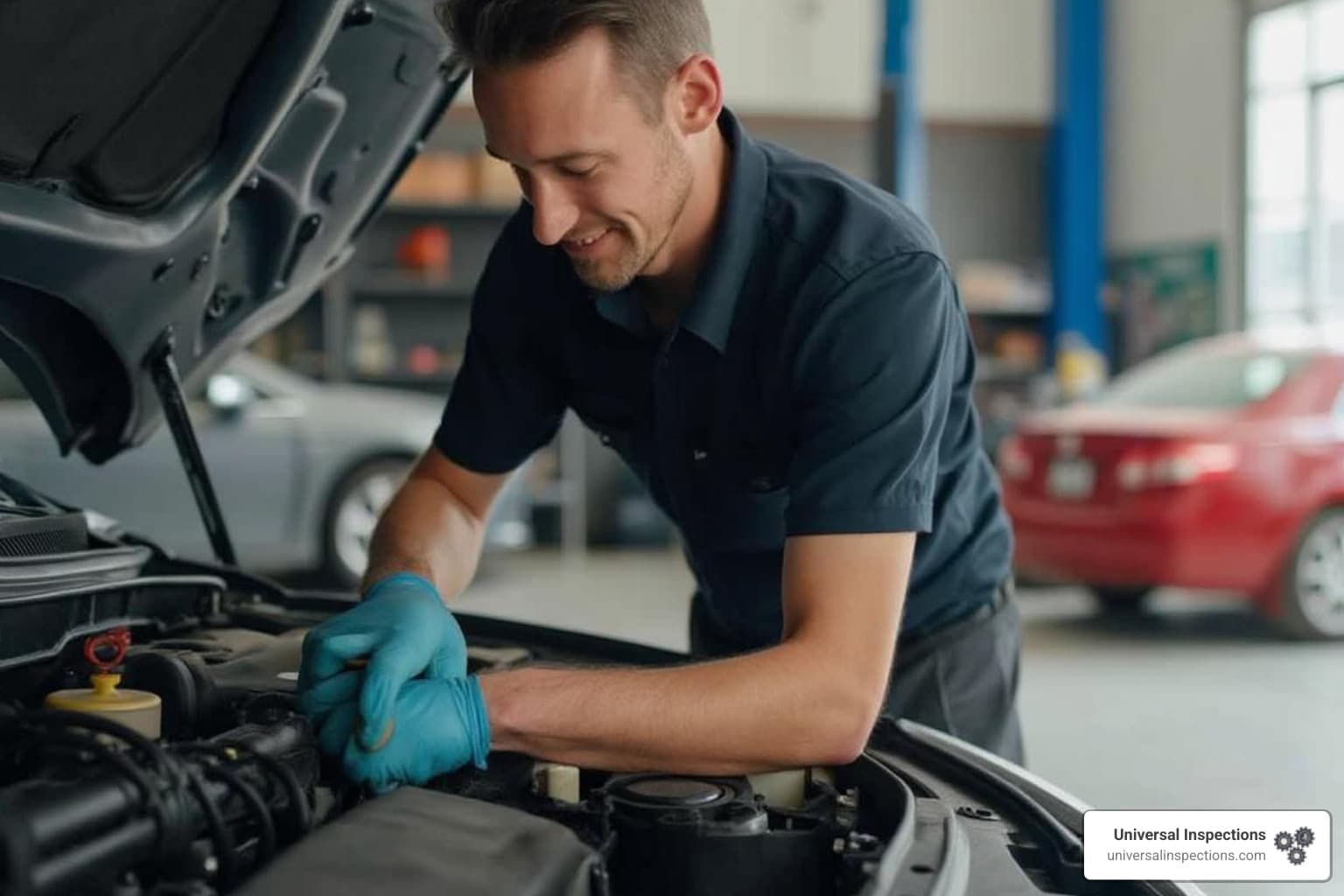
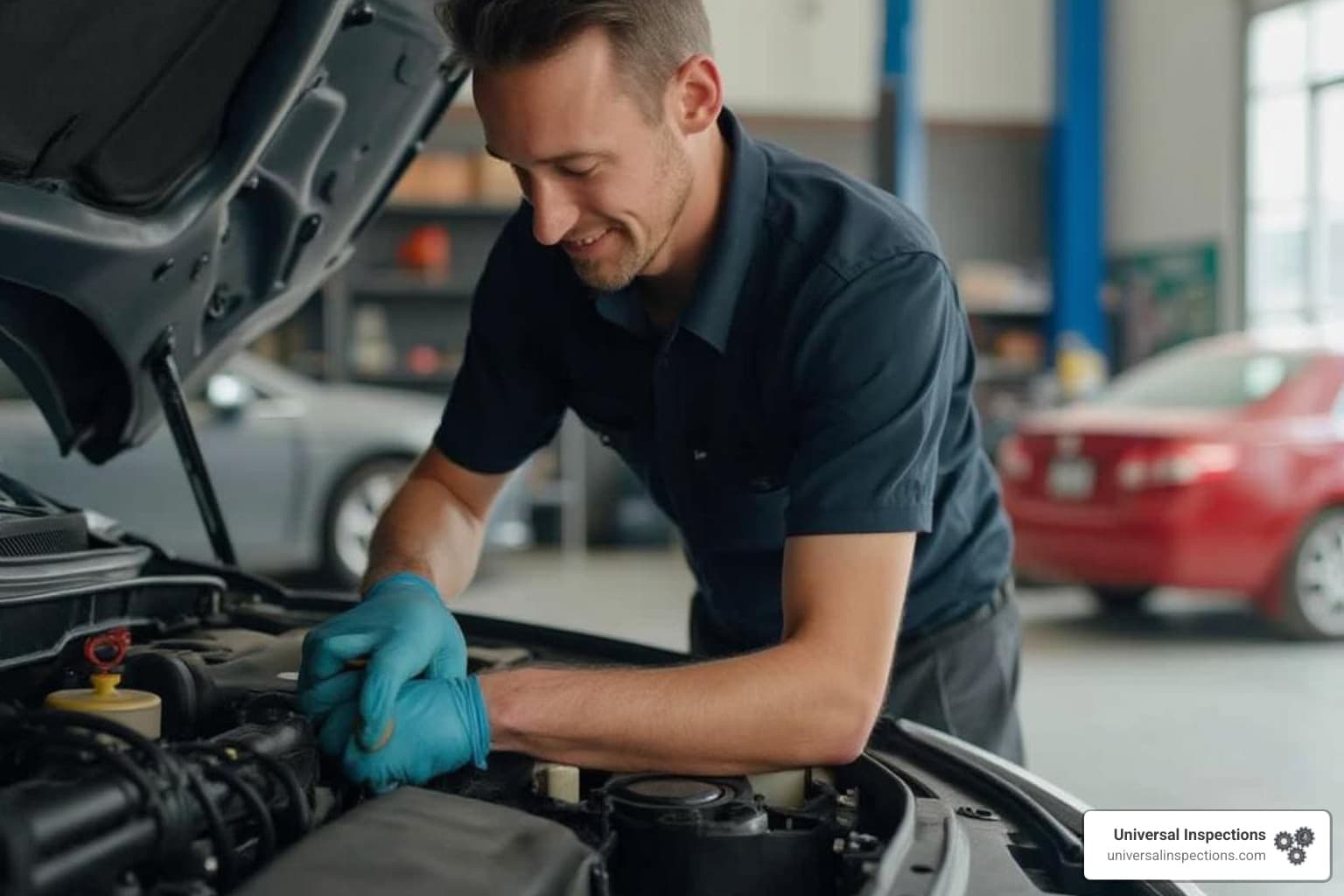
A really good pre-purchase inspection (PPI) leaves no stone unturned. Our expert mechanics use a comprehensive checklist that covers every major system and component, from front bumper to back bumper. They'll even hook up diagnostic tools to "talk" to the car's computer, looking for any hidden messages or "Diagnostic Trouble Codes" (DTCs) that could signal problems you wouldn't otherwise know about. This thoroughness is exactly what makes a professional PPI so valuable.
So, what does this "forensic examination" actually involve? A skilled mechanic will systematically go through the entire car.
First, they'll perform an Exterior Check. This means carefully looking at the body panels for rust, dents, scratches, or any signs that parts don't quite line up. Mismatched paint or big gaps between panels can often be a clue that the car was in an accident and perhaps not repaired perfectly. They'll also check the glass for chips or cracks, make sure all the lights work, and examine the tires for wear and tear. Uneven tire wear can be a big red flag, hinting at suspension or alignment issues.
Next, it's time for the Interior Check. The mechanic will get inside and check the upholstery for rips, stains, or excessive wear. They'll test every button and switch – from the air conditioning and heating to the radio and power windows. Unusual smells, like a musty odor (which could mean water leaks) or a strong smoke smell, are also noted. Even something as small as worn pedals can tell a story about how much the car has really been driven.
Then, they'll pop Under the Hood. This is where the engine, battery, and all the important fluids live. The mechanic will look for any signs of leaks, listen for odd noises, and check the battery's health. They'll pay close attention to fluids like engine oil (looking for grit, water, or a foamy appearance that could mean big trouble), transmission fluid (it should be pinkish, not dark brown and burnt-smelling), power steering fluid, and brake fluid. Hoses and belts will be checked for cracks or fraying – small things that can lead to big problems.
The Undercarriage Inspection is super important and requires the car to be lifted up (or carefully jacked up for mobile inspections). Here, the mechanic searches for fluid drips that indicate leaks, examines the exhaust system for heavy rust, and checks crucial parts like CV joint boots. If these rubber boots are torn and leaking grease, it usually means expensive CV joint repairs are coming. Most critically, they're looking for signs of past structural damage, like bent frame rails or suspicious welds, which are clear indicators of a severe accident.
If possible and safe, a Test Drive is a must. This allows the mechanic to feel how the car handles on the road. They'll pay attention to acceleration, braking, how smoothly the transmission shifts, any strange noises from the suspension, and how the engine performs under real-world conditions. It’s all about getting a feel for the car's true driving dynamics.
Finally, they'll check for Diagnostic Trouble Codes (DTCs). Modern cars are basically computers on wheels. By plugging into the car’s diagnostic port, the mechanic can read codes that the car's computer has stored. Even if no warning lights are currently on, these past codes can reveal issues that were recently cleared or intermittent problems. It's like finding a secret diary of the car's past ailments! Oh, and don't forget to Check for safety recalls yourself using the car's VIN on the NHTSA website. It's a quick check that can save you a lot of worry.
Once the inspection is complete, your mechanic will give you a comprehensive report. This is your secret weapon in the used car buying process.
The report should be a detailed, written document that clearly outlines everything the mechanic found. It will include detailed findings for each area of the car, noting everything from minor cosmetic flaws to major mechanical issues. Many inspection services, like ours, will also include photographic evidence of specific problems, so you can see exactly what they're talking about.
Crucially, the report should provide estimated repair costs for any necessary fixes. This allows you to put a real number on potential future expenses. Finally, there will be a mechanic's summary, which is a concise overview of the car's overall condition, often with a clear recommendation: Is this car a green light, a yellow light (negotiate!), or a red light (walk away!)?
This report gives you objective facts, not just feelings. It empowers you to make a truly informed decision and gives you significant leverage when it comes to negotiating with the seller. To get a better idea of what to expect, you can review our detailed inspection reports to see how thorough we are.
Alright, you've done the smart thing: you decided to find a mechanic to inspect a used car, and now you have that detailed pre-purchase inspection report in your hands. This isn't just a bunch of technical jargon; it's your secret weapon in the used car buying process!
This report truly puts you in the driver's seat. It means you're no longer guessing about the car's condition. You know exactly what you're buying, from the smallest ding to the biggest mechanical issue. This informed decision-making process is what empowers you, protecting you from unexpected, wallet-draining surprises down the road. It's all about peace of mind and making a purchase you won't regret.
This inspection report is your ultimate negotiation tool. If your mechanic found any issues – and let's be honest, most used cars have a few – you now have concrete, expert-backed reasons to discuss the price.
Your Negotiation Powerhouse: The detailed list of identified problems, especially with estimated repair costs, isn't just theory. It's solid proof. You're not just asking for a lower price because you feel like it; you're doing it based on an expert assessment of the car's true value, considering its current condition.
Getting a Price Reduction: Say the inspection found $1,500 worth of necessary repairs. You can confidently propose that amount be knocked off the asking price. It’s a fair way to factor in the upcoming expenses. We’ve seen buyers successfully negotiate prices down to the car's true book value, minus those identified repair costs.
Requesting Repairs: Sometimes, instead of a price drop, you might ask the seller to fix the issues before you buy. This is often an easier conversation with dealerships, as they usually have their own service departments.
Cosmetic vs. Mechanical: The report helps you easily tell the difference between minor cosmetic issues (like a scratch or a tiny dent) and actual mechanical problems (like worn brakes or a leaky seal). While you might still negotiate for cosmetic fixes, those mechanical issues are direct costs you'll have to deal with, and the report helps you quantify them clearly.
Knowing When to Walk Away: This is perhaps the most important power the report gives you. If your trusted mechanic uncovers serious structural damage, extensive mechanical failures, or a history of major accidents that the seller conveniently 'forgot' to mention, the report provides a clear, undeniable reason to simply walk away. As one smart buyer put it, "If the inspection uncovers something major, you should absolutely walk away. If it's minor, it might change the price point." Your investment is worth protecting, even if it means waiting for the next car.
Listen closely: if a seller, whether private or a dealership, refuses to let you get a pre-purchase inspection, consider it a major red flag. Seriously, a huge, waving, blinking red light.
A truly reputable seller has nothing to hide. They should welcome an independent inspection because it shows transparency and confidence in their vehicle. If they object, it strongly suggests they might be hiding something significant – perhaps a known mechanical issue, undisclosed accident damage, or a history they really don't want you to find.
In such a scenario, our advice is simple and firm: walk away from the deal. There are always plenty of other used cars out there. You absolutely do not want to risk buying a vehicle with hidden problems that could cost you thousands of dollars and endless headaches down the road. Protecting your investment means prioritizing your peace of mind over a potentially problematic purchase.
We understand that arranging a pre-purchase inspection might bring up several questions, especially if it's your first time navigating the used car market. It's totally normal to have these thoughts! Here are some of the most common inquiries we receive, and our best advice to help you feel confident every step of the way.
Arranging a pre-purchase inspection (PPI) is all about clear communication and a little coordination with the seller. Think of it as a crucial step, not a hurdle!
First off, when you express your serious interest in a car, make it clear that your offer to purchase is contingent upon a satisfactory pre-purchase inspection. This sets the right expectation from the get-go. It shows you're a serious buyer who also values making an informed decision.
Once you’ve test-driven the car and feel good about it, simply ask the seller if you can take the car to your chosen mechanic for an inspection. Most reputable sellers, whether private parties or dealerships, will agree to this. If you’re buying from a private owner, you might offer to follow them to your trusted shop, or even arrange for a mobile inspection service to come directly to the car's location. This is often the easiest route for everyone involved!
The buyer typically pays for the inspection. This ensures that the mechanic is working solely for you, providing an unbiased, honest report of the vehicle's condition. It's a small investment that protects you from potentially much larger future expenses. We often find a mechanic to inspect a used car for our clients in a way that minimizes fuss, especially with our mobile options. This means less coordination stress for you and the seller!
This is a great question, and the answer is: it's highly beneficial if you can be there, but it's not always a must!
If your schedule allows, being present during the inspection offers some fantastic advantages. You get to ask your mechanic questions in real-time, see any issues as they're pointed out, and truly understand the severity of any findings. It also helps build a direct rapport with your inspector. It's your opportunity to learn a lot about the car and what you might be getting into.
However, we understand life gets busy! Many inspection services, including ours, are designed to work seamlessly even if you can't be physically present. This is especially true for mobile pre-purchase inspections or when you're buying a car from out-of-state. We'll send you a detailed written report, complete with photos, and follow up with a thorough phone call to explain all our findings. Our goal is to ensure you have all the information you need, whether you're right there with us or across the country.
It's super important not to confuse a pre-purchase inspection (PPI) with a state safety inspection. While both involve checking a car, they serve entirely different purposes, kind of like a basic check-up versus a full physical exam.
A state safety inspection (or emission inspection, depending on your state) is a legal requirement in many places. Its main purpose is to ensure a vehicle meets the minimum safety and environmental standards set by the government to be roadworthy. It's about regulatory compliance – making sure the car is safe enough to drive on public roads.
A PPI, on the other hand, is all about your investment protection. Its purpose is to give you a comprehensive, in-depth understanding of the vehicle's true mechanical and cosmetic health before you buy it. It goes far beyond what a state inspection covers. We don't perform state-required inspections; our focus is solely on providing you with that detailed, unbiased assessment of the vehicle's overall health and potential future needs.
Think of it this way: a state inspection is a hurdle the car has to clear to be legal. A PPI is a proactive step you take to protect your hard-earned money from hidden problems. A PPI is always more detailed and custom to the buyer's needs than any state-mandated check, giving you the peace of mind to drive away with confidence.
Buying a used car is a big decision, and it can feel a bit risky. But when you take the smart step to find a mechanic to inspect a used car with a thorough pre-purchase inspection, you turn that risk into a real opportunity. It's all about making an informed choice!
Throughout this guide, we've talked about why a pre-purchase inspection (PPI) is truly your best investment. It’s your secret weapon for finding hidden problems, giving you powerful negotiation tools, and ultimately, delivering that priceless peace of mind. We've shown you how to find a great, unbiased mechanic – someone with ASE certification and real experience in PPIs, maybe even a convenient mobile inspection service. And we've walked you through exactly what a detailed inspection covers, from the mechanic's checklist all the way to understanding that all-important final report, and how to use it to your advantage.
Here at Universal Inspections, we're dedicated to giving you the most comprehensive pre-purchase inspections for used vehicles across Alabama, Tennessee, and Mississippi. Our unique promise is our super thorough and completely unbiased service. This means you can relax, knowing your investment is protected before you even shake hands on the deal. We really get how tricky buying a used car can be, and our team even works with extended warranty companies to help figure out why vehicles might have issues for their customers.
So, whether you're searching for a car in Birmingham, Montgomery, Anniston, or Tuscaloosa, Alabama, or anywhere else in our service areas, our main goal is to arm you with all the knowledge you need to make a truly smart purchase. Don't let unexpected problems turn your dream car into a headache.
Schedule your comprehensive pre-purchase inspection today! Drive away with confidence, knowing you've made the absolute best choice.