Buying a used car can feel like a gamble. You want a great deal but also need to avoid a "lemon" with hidden problems. The good news is, you don't need luck—you need a solid plan to check used car health.
Here's a quick overview of the process:
Research its History: Look into vehicle reports and recalls.
Inspect It Yourself: Do a thorough visual and tactile check.
Get a Professional Inspection: Have a certified mechanic perform a pre-purchase inspection (PPI).
This guide walks you through each step, providing the information you need to make a smart choice and drive away with confidence.
I'm Howard Lutz. With four decades in the automotive industry and over 25,000 vehicle inspections under my belt, I have a deep understanding of how to truly check used car quality. I'm excited to share this knowledge to help you make an informed decision.
Before you see a potential used car, some detective work is needed. This phase is about gathering intel to build a clear picture before you commit.
First, determine a fair price and the car's general reliability. You don't want to overpay or buy a vehicle known for breaking down. Check trusted pricing guides like Kelley Blue Book and the National Automobile Dealers Association Guides. They show what a car with a specific year, make, model, mileage, and condition typically sells for.
Next, research reliability. Look at owner reviews and ratings for the specific model. Are there common transmission problems or electrical issues? Knowing these potential problems beforehand can save you headaches and money. This research helps you set a realistic budget and know what to expect.
A Vehicle History Report (VHR) is the car's life story and a must-have tool to check used car health. The Federal Trade Commission (FTC) also stresses its importance. To get a VHR, you need the car's Vehicle Identification Number (VIN), a 17-character code found on the driver's side dashboard or doorjamb sticker.
A VHR shows ownership history, accident reports, and a potential salvage title. A salvage title means the car was declared a total loss, which affects its safety, value, and insurability. Also, check odometer records for tampering and look for any available service history.
Get a report from an approved provider listed on the National Motor Vehicle Title Information System (NMVTIS) website. Services like AutoCheck and Carfax also offer reports for about $20 to $40. This small cost can save you from huge repair bills. A VHR only includes reported information. Unreported accidents won't appear, which is why a VHR is a great first step, but not the only one.
After reviewing the VHR, check for open safety recalls on the National Highway Traffic Safety Administration (NHTSA) website, safercar.gov, using the car's VIN.
Now, talk to the seller. Asking smart questions is crucial. Here are some key questions to ask:
"How many miles does it have, and why that much or little?" High highway miles can be easier on a car than city driving. Be cautious of vague answers.
"What's the car's overall condition?" A good seller will be upfront about any known problems.
"Has it ever been in a crash? Do you have service records?" If yes to a crash, ask about the repairs. A pile of maintenance receipts is a great sign.
"Are there any open recalls on the car?" You'll double-check this, but their knowledge is telling.
"Have you owned it since it was new, and are you the main driver?" This helps you understand its history.
"Why are you selling the car?" A believable reason is good; an evasive story is a red flag.
When buying from a dealer, look for the FTC Buyers Guide sticker. This legally required guide states if the car is sold "as is" (no warranty) or with a warranty, detailing what the dealer covers.
Now it's time for the hands-on inspection. This is your chance to check used car health up close and spot red flags a quick glance would miss. Inspect the car in daylight on a level surface. Bring gloves, a rag, paper towels, and a flashlight.
Begin your physical check used car journey with a walk-around. Check for paint consistency and even panel gaps. Misaligned panels can indicate a poor accident repair. Look for rust spots, especially in wheel wells and under doors. Bubbling paint is a bad sign.
Tires tell a story. All four should match and have even wear. Check tread depth with a quarter: if you can see the top of Washington's head, the tire needs replacing. Uneven wear can signal alignment or suspension problems. Don't forget to check the spare tire, jack, and lug wrench.
Inspect all glass for cracks or large chips. A small chip can spread, leading to a costly replacement. Finally, check the suspension. Push down on each corner; it should rebound once and settle. Multiple bounces suggest worn shocks. Tug the top of each front tire; looseness or clunking could mean worn bearings or suspension joints.
When you open the door, use your nose. A musty or moldy smell is a red flag for water leaks. Check under the floor mats for wet spots. Examine worn seats for rips and test all seat adjustments. Check pedal wear; excessively worn or new pedals on a high-mileage car can be suspicious.
Check the dashboard warning lights. Turn the key to "on"; all lights should illuminate briefly. Start the engine; all lights should then turn off. Any light that stays on is a serious red flag. Test the A/C and heat, ensuring they work quickly. Then, check all electronics: windows, locks, mirrors, radio, and other features. Inspect the headliner for stains and test the sunroof. Check the trunk and spare tire well for water entry or rust.
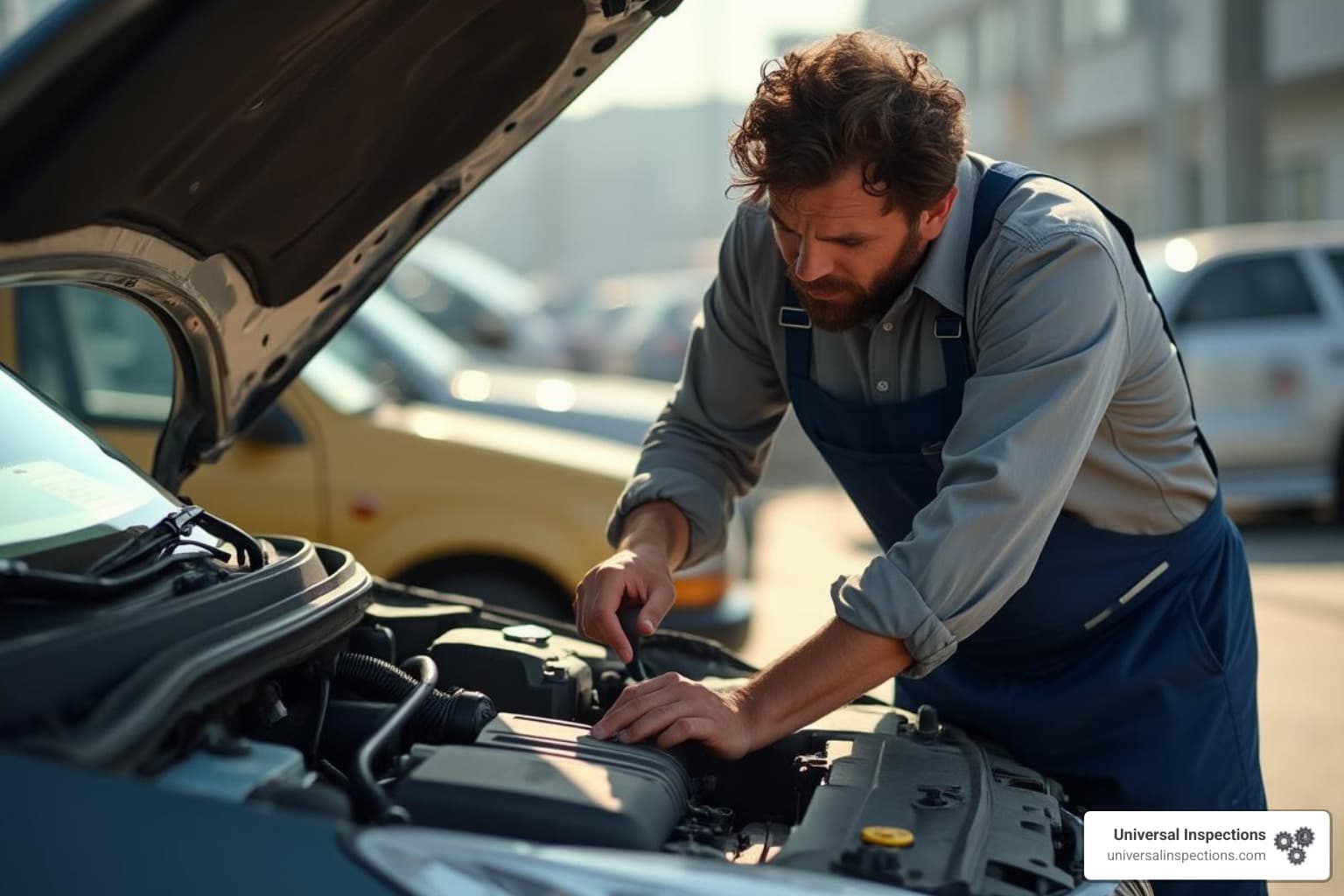
Pop the hood, ensuring the engine is cool before touching anything.
Perform an engine oil check. The oil should be amber or dark brown. Gray or foamy oil is a huge red flag for a cracked block or blown head gasket. For automatic transmissions, check the transmission fluid color. It should be pinkish, not brown or burnt-smelling, which signals potential issues.
Inspect hoses and belts. Hoses should be firm, not hard or cracked. Check belts for fraying. Look at the battery for excessive corrosion. Check for radiator leaks by looking for greenish stains on the radiator itself. The coolant should be green or orange, not milky or rusty. Also, check power steering and brake fluid levels.
It's crucial to look underneath the vehicle with a flashlight. Look for fresh fluid leaks on the pavement or engine. Check the exhaust system for rust; heavy rust can lead to expensive leaks. Most importantly, look for frame damage, kinks, or welds. Inspect the frame rails for bends or welding, which indicate a major past accident and compromise safety. Finally, look for split CV joint boots on front-wheel-drive cars. If these rubber boots are split and leaking grease, the CV joints are likely bad, leading to a costly repair.
While a DIY inspection is crucial, it's not a substitute for an expert evaluation. A professional Pre-Purchase Inspection (PPI) is the final and most important step to check used car health.
Always get a PPI from an independent, qualified mechanic before buying. Here's why:
Mechanic's Expertise: A professional has the training, experience, and tools to spot issues you might miss, like subtle wear, looming failures, or poor repairs.
Unseen Issues: A mechanic can lift the car to inspect hidden components and identify non-obvious problems with the engine, transmission, and suspension.
Diagnostic Tools: Mechanics use advanced diagnostic tools to read trouble codes and evaluate electronic systems, revealing underlying issues before they become major problems.
Cost vs. Savings: A PPI costs around $100 to $150. This small upfront cost can save you thousands in unexpected repairs.
Peace of Mind: A professional's report provides peace of mind, allowing you to buy with confidence.
How VHR and PPI Complement Each Other: The VHR is the car's written history; the PPI is its current health report. The VHR might show an accident, but the PPI confirms the repair quality. Together, they provide a complete picture to check used car condition.
Finding a qualified mechanic is crucial. Look for shops with certifications from the National Institute for Automotive Service Excellence (ASE). You can also check the Better Business Bureau or ask for referrals.
Once complete, the mechanic provides a written report detailing all findings and estimating repair costs. This gives you powerful leverage to negotiate the price. If a seller refuses to allow a PPI, it's a major red flag—walk away from the deal rather than inherit someone else's expensive problems.
For buyers in Alabama, Tennessee, and Mississippi, Universal Inspections offers comprehensive, unbiased pre-purchase inspections to provide the ultimate peace of mind. We pride ourselves on our thorough service, helping to protect your investment. Learn more about our comprehensive vehicle inspection services.
Here are some common questions we hear about how to check used car vehicles before you buy.
The biggest red flag is a seller's refusal to allow a pre-purchase inspection (PPI). If they won't let an independent expert look at the car, they are likely hiding something significant. It's a deal-breaker. Other critical signs include evidence of frame damage, a "salvage" title on the vehicle history report, and major fluid leaks like foamy engine oil or burnt-smelling transmission fluid. Trust your gut; if something feels off, it probably is.
A professional PPI typically costs between $100 and $150. This small investment can save you thousands of dollars in future repairs by identifying hidden problems before you buy. It's an investment in your peace of mind and your wallet.
No. A vehicle history report (VHR) is an essential tool, but it's not foolproof because it only contains officially reported information. Accidents settled privately or unreported damage won't appear. This is why a physical PPI is so crucial. The VHR tells the car's reported history, while the PPI confirms its current health. Using both gives you the most complete picture when you check used car options.
Buying a used car doesn't have to be a gamble. By following our three-phase process—thorough research, a detailed DIY inspection, and a professional pre-purchase inspection—you empower yourself to make an informed decision. This process is about protecting your investment and avoiding the headaches of unexpected repairs. That peace of mind is priceless.
For buyers in Alabama, Tennessee, and Mississippi, Universal Inspections is here to help. We offer comprehensive, unbiased pre-purchase inspections to uncover hidden issues. Our expertise gives you the leverage and knowledge you need to check used car quality with ultimate assurance.
Ready to buy smart and drive worry-free? Learn more about our comprehensive vehicle inspection services and schedule your inspection today. Let's make sure your next used car is a winner!