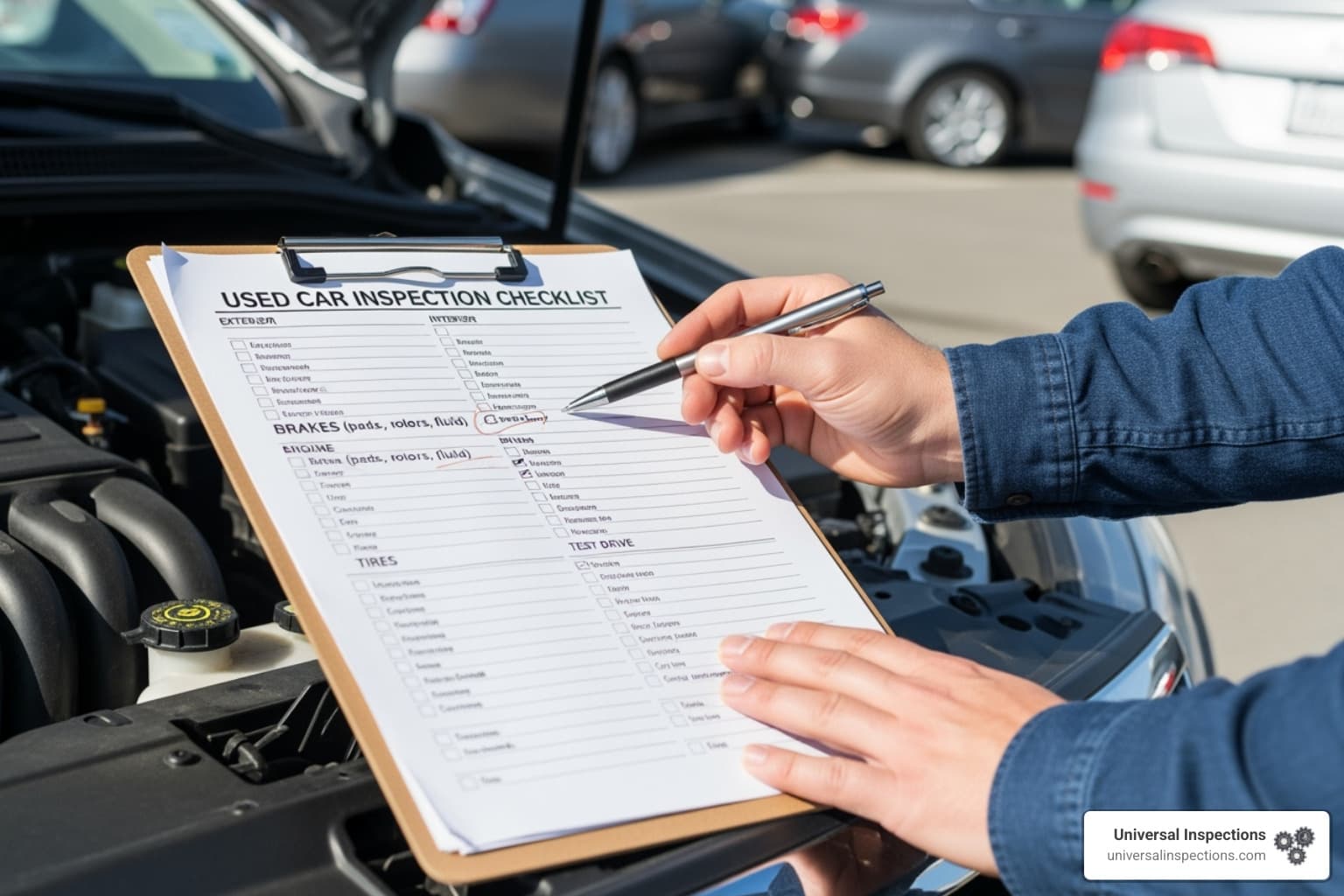
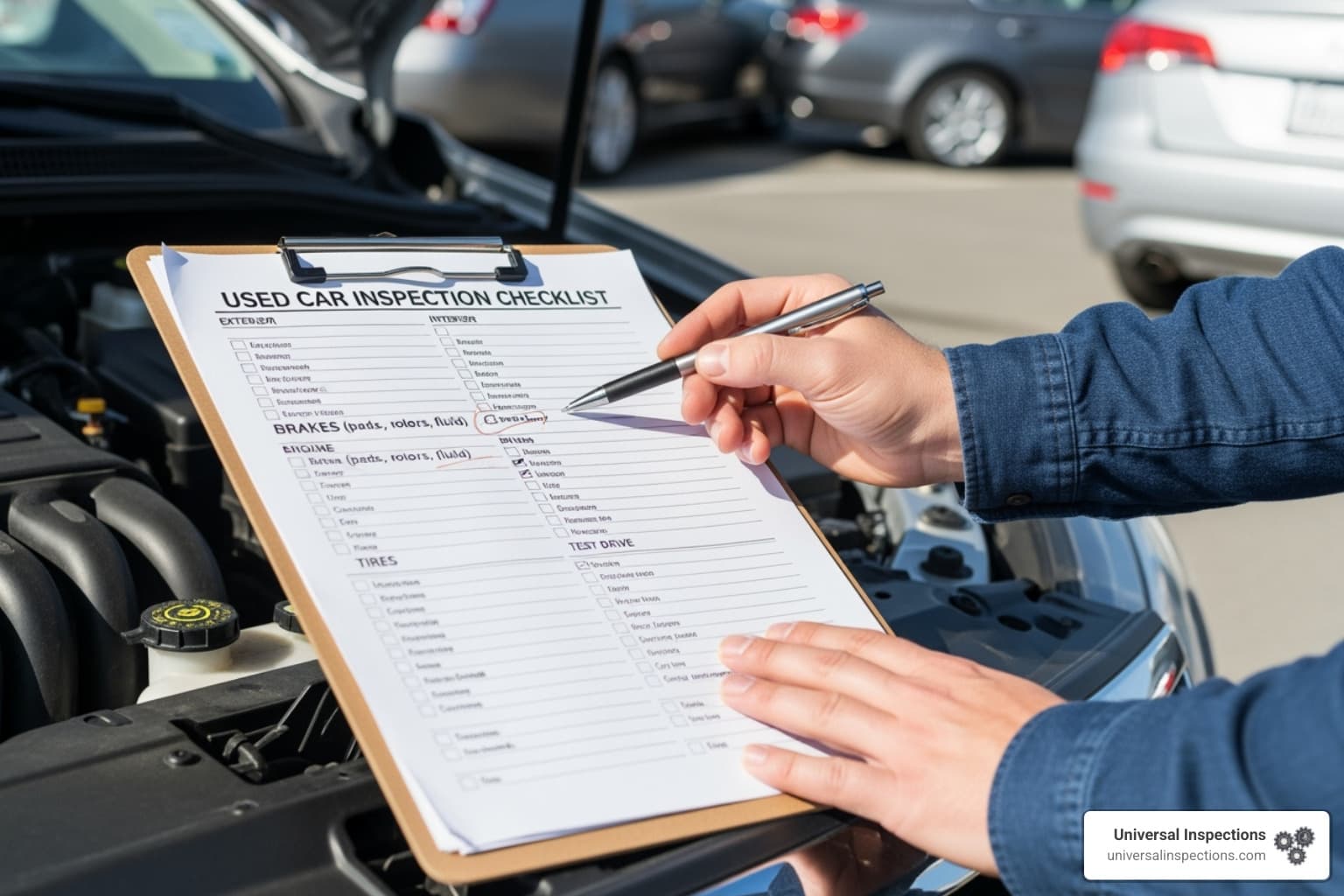
When buying a used car, a thorough buy used car checklist is your most important tool. To get started, focus on these five core areas during your inspection:
Paperwork & History: Verify the VIN, check service records, and review history reports.
Exterior: Look for body damage, rust, paint issues, and tire condition.
Interior: Inspect upholstery, test electronics, and check for odors or water damage.
Mechanical: Examine the engine for leaks, check fluids, and listen for strange noises.
Test Drive: Assess the engine, transmission, brakes, and steering.
A pre-owned vehicle is a smart financial decision, but the fear of hidden defects and unexpected repair costs is real. The used car market is booming, making a clear roadmap more crucial than ever. This guide is that roadmap, helping you avoid common pitfalls and buy with confidence.
I'm Howard Lutz. With four decades in the automotive industry and over 25,000 vehicle inspections under my belt, I know the value of a detailed buy used car checklist. This experience is the foundation of Universal Inspections' mission: to provide unbiased, honest pre-purchase inspections that give you peace of mind.
Before you see the vehicle, your buy used car checklist begins with some homework. This prep work helps you avoid wasting time on the wrong car.
First, arrange to see the car in an open, well-lit space during the daytime on a dry day. Sunlight is best for spotting paint imperfections, dents, or scratches. Level ground is also essential for accurately checking fluid levels and the car's stance.
Next, ask the seller some key questions:
"Why are you selling the car?" A straightforward answer is a good sign. Evasiveness is a warning.
"Do you have maintenance records?" A stack of documents suggests a well-cared-for car.
"Has it been in an accident?" If so, ask for details about the damage and repairs.
"Are there any known problems?" This gives the seller a chance to be upfront.
"Is it okay to have my mechanic inspect it?" A refusal to allow a professional pre-purchase inspection is a major red flag. They may be hiding something.
Finally, get a vehicle history report (like Carfax or AutoCheck). This report reveals past issues like accidents, title problems (such as a salvage or branded title), and service records. Cross-check this information with the seller's answers to ensure everything lines up.
For more info about our inspection process and what makes Universal Inspections different, we invite you to visit our About Us page.
Paperwork is the backbone of a used car purchase. Verifying these documents is a non-negotiable part of your buy used car checklist.
First, perform VIN verification. The Vehicle Identification Number (VIN) is the car's unique fingerprint. Ensure the VIN on the documents (Registration Certificate, insurance, history report) matches the VIN on the car itself (dashboard, driver's side door jamb, engine bay).
Next, check the Registration Certificate (RC). Confirm the make, model, engine number, and chassis number on the RC match the car. Verify the owner's details match the seller's.
Review the insurance documents. A valid policy indicates the car is roadworthy. Check the No Claim Bonus (NCB), which hints at recent claims. If the car was financed, you need Form 35 and a No Objection Certificate (NOC) from the lender confirming the loan is paid off.
Service records are gold. They show how well the car was maintained and help verify the odometer reading. If the mileage on the odometer doesn't align with the service history, it could be a sign of odometer tampering.
Finally, check for open recalls. You can use the VIN to check for outstanding safety recalls on the National Highway Traffic Safety Administration (NHTSA) website. These are usually fixed for free by dealers. Also, consider the car's safety ratings from organizations like the Insurance Institute for Highway Safety (IIHS) as part of your assessment.
Now it's time for the hands-on inspection. This part of your buy used car checklist is where you assess the car's cosmetic and functional condition, looking for wear and tear, damage, and hidden problems.
Begin with a slow walk around the car, scrutinizing every panel.
Body & Frame: Check for uneven body panel gaps between fenders, doors, and bumpers, which can indicate a past accident. Look for frame damage signs like bent body lines or new welding on the frame. Fresh undercoating can sometimes hide structural repairs.
Paint & Rust: Look for paint consistency. A different shade or texture on one panel suggests a repaint. Use a small magnet to check for Bondo (body filler); if it doesn't stick, there's filler underneath. Check for rust spots, especially in wheel wells, under doors, and on the underbody. Rust is a major red flag, and a musty smell inside combined with rust could mean flood damage.
Tires & Glass: Check tire condition. Use a quarter to check tread depth; if you see the top of Washington's head, the tires are worn. Uneven wear can point to alignment or suspension issues. All four tires should ideally be the same brand and size. Inspect all glass for chips and cracks. Ensure all lights and lenses work and are free of cracks or condensation.
The interior reveals how a car has been cared for.
Condition & Odors: Check the upholstery condition for tears, stains, or burns. Sniff for musty or smoke odors. A musty smell can indicate water leaks or flood damage; check for damp carpets or rust on the floor pan. Look for a sagging headliner or cracks on the dashboard.
Wear Indicators: Check the pedal wear. Excessive wear on a low-mileage car is a red flag for odometer tampering.
Electronics Test: Turn the key to the 'accessory' position and test everything:
AC/Heat
Radio/Infotainment System
Power Windows, Mirrors, and Locks
Sunroof
Wipers and Washer Fluid
Horn
All Interior Lights
Power Seats
Seatbelts
Warning Lights: When you start the car, all warning lights should illuminate briefly and then turn off. If any light stays on (like the 'Check Engine' light), there's a problem. Be wary if an OBD-II scanner shows a P1000 code, as it can mean someone recently cleared error codes to hide an issue.
This part of your buy used car checklist focuses on the vehicle's mechanical heart. A systematic look here can save you from major headaches and expenses. We recommend starting this inspection with a cold engine, as some issues are only apparent before the car has warmed up.
Listen for unusual noises like knocking or squealing during a cold start. An engine that struggles to start or idles roughly is a red flag.
Fluids: Check the engine oil dipstick. The oil should be transparent (light or dark). Milky, foamy, or gritty oil is a major problem, suggesting a cracked engine block or blown head gasket—a very costly repair. Check the coolant reservoir; the fluid should be brightly colored. Bubbling in the reservoir when the engine is running is another sign of a blown head gasket. Look for any fluid leaks on the pavement under the car.
Belts, Hoses, and Battery: Inspect hoses and belts for cracks, swelling, or fraying. Worn parts will need replacing. Check the battery terminals for corrosion (a white or greenish crust). A battery's lifespan is typically 3-5 years. Also, look for greenish stains on the radiator, a clear sign of a leak.
Crouch down to peer underneath the vehicle.
Exhaust and Frame: Look for excessive rust or holes in the exhaust system. Scan for drips or wet spots under the engine and transmission. Check the frame integrity for kinks, large dents, or suspicious welding, which are signs of a significant accident. Be wary of fresh undercoating, as it can hide rust or repairs.
Suspension and Axles: Perform the "push-down test" on each corner. The car should rebound once and settle. If it bounces, the shocks are likely worn. Listen for creaking or clunking sounds. Check the CV joint boots (black rubber bellows on the axle ends). If they are split and leaking grease, the CV joints are likely bad and will require an expensive repair.
For more helpful tips on what to look for, be sure to Read our blog!
The test drive is your best opportunity to feel how a car performs. Turn the radio off and use all your senses—this is the car's audition. If possible, ask the seller not to start the car before you arrive so you can hear a true cold start.
Engine and Acceleration: Listen for unusual engine noise like knocking, whining, or ticking as it warms up. A healthy engine should settle into a smooth hum. When you accelerate, it should be smooth, without hesitation or sputtering.
Transmission: In an automatic, gear changes should be almost unnoticeable. Harsh shifts, slipping (engine revs but car doesn't accelerate), or a delay are bad signs. In a manual, the clutch should engage smoothly without slipping, and shifting should be precise, not grinding.
Brakes and Steering: Test the brakes at different speeds. The car should stop smoothly and in a straight line. Listen for squealing or grinding, and feel for vibrations in the pedal, which could mean warped rotors. On a straight road, the car should track straight without pulling to one side. If it drifts, the alignment is off. Listen for groaning or clunking when turning the wheel lock-to-lock.
Suspension and Comfort: Drive on different roads, including city streets, the highway, and over some uneven roads or speed bumps. Listen for loud thuds or rattles from the suspension. At highway speeds, note any excessive wind noise or vibrations.
Features and Gauges: Test the cruise control to ensure it engages and holds speed. Keep an eye on the dashboard for any warning lights and check that all gauges (speedometer, tachometer, fuel, temperature) are working correctly.
This full sensory experience is a vital part of your buy used car checklist, helping you judge if the car is a trusty companion or a potential problem.
Finding minor issues on a used car isn't a deal-breaker; it's a negotiation opportunity. These findings can help you secure a better price or signal that it's time for an expert opinion. For buyers in Alabama, Tennessee, and Mississippi, a trusted company like Universal Inspections can provide a comprehensive, unbiased report to protect your investment.
Even with a thorough checklist, some issues are invisible without a professional's eye. A Pre-Purchase Inspection (PPI) is a game-changer, uncovering hidden problems that a regular test drive might miss.
At Universal Inspections, our job is to provide an honest, expert opinion. We use specialized tools, including a diagnostic scan (OBD-II) to find hidden error codes and can arrange a compression test to assess engine health. A PPI gives you true peace of mind, helping you avoid costly mistakes. Our detailed reports cover everything from the frame to the electronics, giving you a clear picture of the vehicle's condition.
Want to see exactly what our services cover? Visit our Services page. If you love cars, you might even consider joining our team. Learn more at Become an Inspector.
Armed with your inspection findings or a professional PPI report, you have serious negotiation power.
Use Your Findings: Politely point out every issue, from worn tires to rust spots, and ask for a lower price to cover future repair costs.
Do Your Research: Know the market value for similar cars (make, model, year, mileage) in your area, whether you're in Birmingham, Montgomery, Anniston, or Tuscaloosa. This helps you make a fair offer.
Get Repair Estimates: If you find specific problems, get quotes for the repairs. This gives you concrete numbers to negotiate with.
Be Prepared to Walk Away: If the seller won't meet a reasonable offer or if something feels off, don't be afraid to say no. There are other cars out there.
Once you agree on a price, finalize the sale correctly. You'll need a clear bill of sale and the seller must properly sign the title transfer over to you. Don't forget the insurance transfer before you drive away.
It's normal to have questions when navigating the used car market. Here are answers to some common concerns to help you use your buy used car checklist with confidence.
These are immediate deal-breakers. Walk away if you see:
A salvage or branded title, which means the car was declared a total loss by an insurer.
Signs of frame damage or major accident repair, like uneven body panels or mismatched paint.
Evidence of flood damage, such as rust in odd places, a musty smell, or silt in crevices.
A seller who refuses a professional inspection is likely hiding something.
Major inconsistencies between the seller's story and the vehicle history report.
Odometer fraud is serious. Look for these clues:
Excessive wear on the driver's seat, steering wheel, or pedals that doesn't match a low mileage reading.
Mileage inconsistencies in service records or vehicle history reports.
Misaligned numbers on older, analog odometers.
A professional diagnostic scan can often reveal the true mileage stored in the car's computer.
To legally own the car, you need the correct paperwork. Do not complete the purchase without:
The vehicle's title (or "pink slip"), properly signed over to you by the seller. This is the legal proof of ownership transfer.
A bill of sale, signed by both you and the seller, that records the price, date, and vehicle details.
The Registration Certificate and any loan-release documents (like a No Objection Certificate) if the car was financed.
You've done the detective work! By using a comprehensive buy used car checklist, you've turned a daunting task into an empowered, informed decision. From checking the paperwork and history to inspecting the car inside and out and taking that crucial test drive, you've gathered the knowledge needed to get a fair deal and avoid surprises.
While your personal inspection is a great start, a professional pre-purchase inspection provides the ultimate peace of mind. At Universal Inspections, we provide unbiased, expert assessments that dig deep into a vehicle's true health, uncovering hidden issues before they become your problem. We're here to help you protect your investment, whether you’re buying in Birmingham, Montgomery, Anniston, Tuscaloosa, or anywhere across Alabama, Tennessee, and Mississippi.
Ready to drive away with total confidence? Explore our pre-purchase inspection services today and let our experts give you the reassuring green light on your next used car.